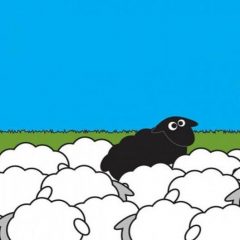
My roots are showing and I don’t care

About five inches worth, with flecks of grey for seasoning. No one seems to notice, or care, or maybe they do, but are just being polite. My natural mousiness has reminded me of my impoverished state.   I can’t afford to get them done, and there’s no way in hell I’d do them myself. I tried once, twice, and three times a-brassy. Brassy on the verge of orange, actually. Very few blondes can get away with self-processing. And the ones who do don’t even need to colour it in the first place. They’re actually blonde.

Blondes, real ones, that is, are on the verge of becoming extinct, according to this BBC article.  Something about a recessive gene. True blondes only make up for about five percent of the entire population. These researchers also believe that the fake ones are to blame, since bottled-blondes are apparently more attractive to men than the natural ones.  Maybe it’s because we looky trampy, especially once the roots start to show. I notice I get more looks and compliments on my hair when I have roots. The Courtney Love look works for me.

Well, I’m not totally fake. As a kid, my hair was lighter,. My natural colour is not quite brown, not quite blonde, just in between, like dirty dishwater or weak milky tea. And I’ve tried colouring it dark brown, even reddish, but those colours make me look sick and pale. So blonde streaks it is, when I have have the cash. And not just any streaks. Few hairdressers know how to do them right. Most just dye it, so the roots show after two weeks, or they choose a garish tone that makes me look cheap and over-processed – shpank me, missy, let’s start breedin’!

So what’s my point? Vanity? Do you really care about my roots? My point is, I don’t care! I must be getting old! I am turning into one of those people. If I were a man, I’d have stubble and long, greasy hair. I already have a pot belly, the Midas touch. Jeez, why I don’t I just start shopping for a trailer? Surrey’s not so far away.

Or maybe it’s just the student/writer thing. Yeah, that’s it, that’s not so scary. That’s kind of cool, actually, artistic and free-spirited. But I’m not folky enough for that. To pull that off, I need to shack up on the Drive, get myself some hippy friends, wear hemp with patched jeans, shop at a co-op, and become vegan.

Crap. This new idenity-thing isn’t working.  I’m just broke, lazy, sick, depressed and … and… how can I finish that with a bang?
I’ll just blame my parents.

Peace out, dudes.

the rain falls
through murky tears
I lay down, weary
shipwrecked
from this battle of storms
grief lays her heavy hands
on my belly
telling me to rest
for now, let it be
nothing can be done
except to ride out the winds
that leave my flesh raw
the sting of betrayal
and lies
stays fresh for eternity
reviving the pain
from childhood
from death
from loneliness
without her presence
it’s hard to carry on
but I must
but for now
I weep

Mmmm, donuts

Last night on the Skytrain, I saw a real, live Homer Simpson. I couldn’t believe my eyes. He was bald, fat, wore wide blue pants that were floods, and he had the same voice and intelligence level. He was talking loudly on his cel phone. I know, Homer Simpson with a cell phone, how frightening. And it truly was. The conversation that followed was hard on the ears, yet extremely entertaining. That is how I determined his intelligence level.

“Guess what I found last night on the street!”

“DONUTS!”

“Yeah, a whole box, and I ate them all!”

“No, I offered her one, but she said no.”

“She said, ‘Go ahead, if you want to get sick!’ “

He mumbled a few other sentences, I couldn’t hear cuz of the train rumbling and squeaking.

He ends the call. Then his phone rings. He answers mid-ring. He starts yelling at the person to meet him at the Skytrain station. That conversation is cut short,  and he slaps his phone shut.

The phone rings again. My, this guy is popular in his world of fellow ignoramuses.

“Hello?”

“Oh YEAH! …  Yeah … Oh, hey! Guess what I did!”

“Yeah … Guess what I just did!”

“Heh, I pissed in the elevator.”

“I said, I PISSED IN THE ELEVATOR!”

” YEAH!”

“It was cool.”

“Okay, I’ll talk to you later, man!”

“Bye”

A few seconds later, his phone rings, and this time, I can hear his ringtone more clearly, a male country singer. Don’t ask me who, I hate country. Oh my, a redneck Homer!

“Hello?”

“Hey, I’m near the Broadway Station. YOU GET OFF THAT BUS RIGHT NOW!!”

He is transforming into Angry Dad. I consider myself lucky to witness this rare event of cartoon/human metamorphosis.

“YES! MEET ME THERE!”

“WHAT?”

“Okay fine, I’ll see you tomorrow.”

He gets up from his seat and stands in front of the exit door right behind me, breathing heavily. He shuffles restlessly and begins pacing in circles.  I’m afraid he is going to pound the glass I’m leaning against because he knows I was listening to his conversation. This is Homer with a violent streak. Then he walks in front of me, down the aisle to the door furthest away. He stands really close to the glass as the train approaches the station. He looks at himself, making faces at his reflection, raising his eyebrows upside down, squinting and blinking heavily, scrunching his lips.

I have to get off too, and I go to the door in front of my seat. As we exit the train, he takes a sudden swing to the left, and practically bumps into me. I avoid him just in time. He glares at me, and I can hear him stop suddenly behind me. I’m afraid he’s gonna follow me for some strange reason. Maybe he thinks I have a donut stash in my backpack. I walk quickly across the platform and down the stairs. When I reach the bottom, I hear a man say, “The one time I go to use the escalator, it’s broken! Off all the times for it to be broken! Now I have to use the stairs!”  I look behind me, but thankfully it’s a man with his young boy, and he encourages the boy  to jump from the third stair up from the ground. Whew. I look up to the top of the stairs. Homer has disappeared.

I think about his conversation as I ride the B-Line bus home. Redneck clods should not be allowed to own cell phones. They should run ignoramus checks before the credit check. People’s ears are on the line.

I am still trying to poke out my mind’s eye.

Fear and Loathing in Las Douglas

At Douglas College, the students of the Print Futures: Professional Writing program are faced with many mixed emotions. One day fear, the other anticipation. The following day our confidence is smashed after we’ve been told our portfolios aren’t anywhere near ready for professional viewing, and that we can’t write a cover letter that would satisfy McDonalds.  Only ten more weeks until we’re done, until the portfolio show where we bare the past two years of our lives to everyone that matters.

As I read my fellow classmates’ blogs, they are expressing the exact same fears and concerns. Are we really qualified to be  professional writers? What happens when the security of the college walls are removed? I don’t remember anything I’ve learned, except for what a dangling modifier is, the purpose of a gerund, and a decent definition for exigence. My one friend outside of the program says she’s seen an improvement in my emails. She said I write with more focus. Hm. That’s somewhat encouraging. Will that get me a job as the next copywriter for MEC?

I picture Maureen, the program coordinator pouring a box full toys over her PF babies, and we can’t figure out how to play with them, except to fight over letter-blocks, cars and dolls, wondering which one is the best choice.  We are then left alone to put them away.

I feel even more vulnerable because I now have a label as a professional writer, and will have a diploma to back it up. I must live up to this label and impress people with my top-notch writing skills. I am paranoid of all emails I send out; people are thinking, “She’s a professional writer. This better be good.” No grammatical errors or spelling mistakes are allowed. Everything I write must be witty, edgy and balanced, capturing my audience from the very start. Part of me wants to retreat back to my old ways, finding the easy way out to a job doing admin work. That way I can’t get rejected or be judged, but then I recall the years of drudgery, bad bosses, and lack of purpose. No, I can’t give up without even trying. Man, I haven’t even started and I’m already complaining!

The distress begins to answer the age-old question: What do I want to be when I grow up? I’m grown up (some of you may beg to differ, especially the way I giggle in class), and I’m still not sure. Editing, book publishing, communications, Public Relations, magazine publishing?  I know I want to write, but now I have to decide who I want to write for, and what I want to write about.

Let’s start with what I don’t want to write about: accounting, finances, mining, computer software, legal matters, technical jargon, politics, the Bible, certain people (can’t name names), research reports, meeting minutes, transcriptions, cars, fishing, sports, sewing, Monster Truck rallies, meat. That’s all I can think of right now.

What I want to write about: the environment, animals, wildlife, health, health care, seniors, children, all people for that matter, social issues, food, cooking, music, books, writing, my family, my friends, economics, culture, the arts, things you can do with cheese and chocolate, religion, my mother, tea, exercising, my lack of exercising, disease, happiness, nice things, depressing things, the media, impacts, natural disasters, the obscure.

And even though I have an idea of who I want to work for, and what I want to write about, there’s the issue of finding work, getting published, rejection, rejection, rejection. I think that’s our biggest fear of all. Do we really have what it takes, not just personality-wise, but the right stuff on paper? Can we really demonstrate that we are the literate, polished, witty writers we claim to be?

Well, at least the good list is longer than the bad list. That’s a start. Right now, my ultimate writing goal is to be a freelancer, submitting articles and stories to magazines, newspapers, book publishers, websites, message boards and blogs. I wouldn’t mind doing contract work for corporate communications and public relations companies, which reminds me, I need to come up with three lists for my Professional Readiness Instructor. A list of PR companies, local magazines, and communications departments in Vancouver that I’d like to work for. Ooo, that’s a long one. I’d better get to work!

Maybe I’m not so hopeless after all. All I can do for now is focus on one day at a time.

Baby steps

The Six Qualities of a Writer

Issue 17, Volume 33, February 15/07, The Other Press

For years I considered myself a true writer, right down to my very soul. Writing is not just scripting words or stringing sentences together to sound good. It’s not just creating a good story or a means of getting attention. To me, it comes down to my personality, what makes me tick, my obsessions and habits, good and bad. Especially the bad. These reflections compelled me to compile a list of qualities in a true writer.

“I write for the same reason I breathe–because if I didn’t, I would die.” Isaac Asimov

#1) Neurotic 


[nooroh-sis, nyoo]

–noun, plural -ses 

1. Also called psychoneurosis.a functional disorder in which feelings of anxiety, obsessional thoughts, compulsive acts, and physical complaints without objective evidence of disease, in various degrees and patterns, dominate the personality.
2. a relatively mild personality disorder typified by excessive anxiety or indecision and a degree of social or interpersonal maladjustment.

Every writer I know (myself included) is anxious, fearful, worrisome, paranoid. I don’t know if this is the chicken or the egg. Do you become neurotic from writing, or does being neurotic make you write? I think it’s a bit of both. You have enough material about your dysfunctional family to fill the Louvre. Once you write and let others read, you are baring your tender belly to the hyenas. The modern, media-obsessed world is cruel, brutally honest and greedy–hungry for meaty material to rip apart.

Taking on the profession of writing is scary, not just because of the fear of rejection or the job instability, but what will result on the page once you start. Things happen when you write – forgotten memories creep up, a whole new personality can emerge, crazy stories take on their own lives. Your pen or computer keyboard takes over, creating an entity that becomes a part of you. This entity will affect someone, perhaps enrage them, make them laugh, cry or fall asleep. What you think is great, someone may mock, and can make you want to curl up and hide for a while. All those things combined would leave even the most left-brained, logical cliff-jumper clinging to the edge.

“Writing is very different to having your photo taken. You are exposing yourself more, not physically but emotionally.” Benjamin Disraeli

#2) Obsessive

This quality goes hand-in-hand with neurosis. Once you start writing, you become obsessed with every detail and em-dash. Each word must be perfect. The number one rule for writing is not to edit while you write, and this is very hard not to do. While you write, you can hear your critics complain, “too much detail!” or “show me, don’t tell me!” The voices go on and on, and you have to push out the one that says you can’t write to save your life. Sometimes you write several paragraphs, save it, go to the grocery store, and a certain line keeps popping up in your head, it’s not quite right, and then a new word or adjective comes to you. You rush home, open the document, and know the exact spot to insert it. You are awakened at night by the same line, with more words to add or delete, and your plot continues in your dreams. You are all-consumed by this piece, and can not rest or concentrate on anything else until it is that brilliantly elegant piece of prose the Governor General has been waiting for all her life. Revise, revise, revise, revise. Edit, edit, edit, edit. A new form of obsessive-compulsive disorder is born.

“Obsession led me to write. It’s been that way with every book I’ve ever written. I become completely consumed by a theme, by characters, by a desire to meet a challenge. ” Anne Rice

#3) Procrastinative

If we are all-consumed by writing, why do we come up with so many creative ways to procrastinate? See “Neurotic” above.

“Procrastination is the fear of success. People procrastinate because they are afraid of the success that they know will result if they move ahead now. Because success is heavy, carries a responsibility with it, it is much easier to procrastinate and live on the ‘someday I’ll’ philosophy.” Denis Waitley

#4) Alcoholic

Every writer I know (again, myself included) loves the lure of alcohol, or some other substance. Why? Again, re-read “Neurosis” above. After each writing class, I find myself with my classmates at the local watering hole, drowning ourselves in our favourites, mine being gin and tonic with a twist of lime. The joys, pain and tolerance of writing just go hand in hand with the numbing-out and false hopes that booze induces. When I read my fellow writers’ blogs, they croon the praises of whiskey that sustains them during a research report and comforts them afterwards. Each teacher in each type of writing on the first day of class confessed to the high rate of alcoholism that accompanied their profession. We all felt right at home.

“I work until beer o’clock.” Stephen King

#5) Insecure

Being insecure could go with any profession, but confidence is something not carried well with writers. I think it’s because of the honesty that needs to accompany writing. You must be honest with yourself, your audience. You can not lie, or hide. And this honesty breeds insecurity. All confidence that people express is fake, an attempt at deceiving their competition and coworkers into intimidation so they can be on top and look good. When you are writing, you cannot fake this, and even though you may express such confidence outwardly to get published, deep down you doubting your abilities and past success. When you get that contract from the publisher, you are sweating bullets as to how exactly you will pull it off. Even successful writers admit that each book was a crap shoot in the beginning. Yet they keep plugging away because they must write, they must change the way the world thinks, not just to be successful or see their name in print (well, maybe just a little).

“Writing is just having a sheet of paper, a pen and not a shadow of an idea of what you are going to say.” Kurt Vonnegut

#6) Courageous

As Margaret Atwood said, “You need a certain amount of nerve to be a writer.” All this risk-taking, revealing yourself and keeping at it after so many rejection letters takes a lot of courage and persistence. A writer must never give up, and despite all the negative connotations that go with writing, must never doubt him or herself. Positive affirmations go a long way, restoring the unknown inner strength each writer has.


“The act of writing is an act of optimism. You would not take the trouble to do it if you felt that it didn’t matter.” Angus Wilson